

Introduction
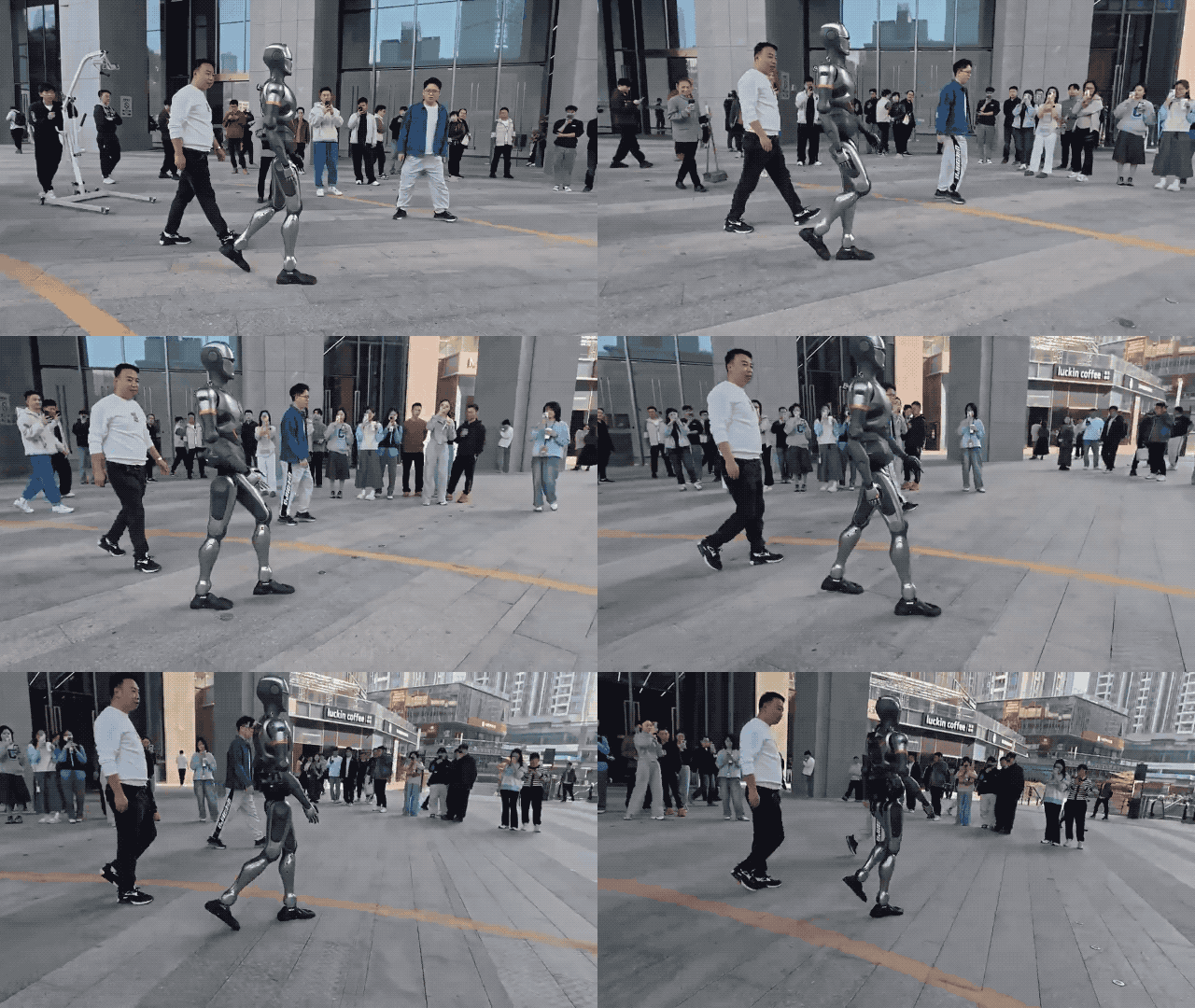
The keyword Advanced Service Robots in Smart Cities represents one of the most exciting developments in modern technology. As urban areas continue to grow, cities are becoming more connected, data-driven, and automated. In this transformation, robots are playing a crucial role in improving efficiency, safety, and convenience for citizens. These intelligent machines are no longer limited to factories; they are now visible in hospitals, airports, shopping malls, and even on public streets.
What Are Advanced Service Robots?
Advanced service robots are intelligent machines designed to perform useful tasks for humans in everyday environments. Unlike traditional industrial robots that operate in controlled settings, these robots work in dynamic urban spaces. They can interact with people, understand voice commands, and navigate complex surroundings using sensors, artificial intelligence, and machine learning.
The concept of Advanced Service Robots in Smart Cities revolves around integrating robotics with smart infrastructure such as Internet of Things devices, cloud computing, and real-time data analytics. This combination allows robots to make quick decisions and adapt to changing urban conditions.
Role of Robots in Smart City Infrastructure
Smart cities aim to use technology to enhance the quality of life, reduce resource waste, and improve public services. Advanced service robots contribute significantly to these goals in several ways:
Public Safety and Surveillance
Robotic security units patrol public spaces, detect unusual behavior, and alert authorities instantly. These robots reduce the workload on human security staff and provide continuous monitoring without fatigue. They can also be used in disaster situations to explore dangerous areas where human entry is risky.
Healthcare and Assistance
Hospitals in modern cities are increasingly adopting robotic assistants. These robots deliver medicines, guide patients to different departments, and even help doctors during surgeries. The use of Advanced Service Robots in Smart Cities ensures faster service, reduced human error, and better patient care.
Smart Transportation Support
Autonomous delivery robots and robotic traffic assistants are becoming part of urban mobility systems. Delivery robots transport food and packages efficiently, reducing traffic congestion and pollution. Some robots also help manage traffic signals by analyzing real-time traffic data.
Benefits of Advanced Service Robots in Smart Cities
The adoption of robots in smart urban environments offers multiple benefits that directly impact daily life.
First, robots increase efficiency by performing repetitive and time-consuming tasks quickly. This allows human workers to focus on creative and strategic responsibilities.
Second, they enhance safety by handling dangerous tasks such as bomb detection, firefighting support, and hazardous waste management.
Third, they improve accessibility for elderly and disabled citizens. Robotic assistants can help with navigation, daily chores, and health monitoring, promoting independent living.
Overall, Advanced Service Robots in Smart Cities contribute to a more inclusive and supportive urban ecosystem.
Challenges and Ethical Considerations
Despite the advantages, there are challenges associated with integrating robots into public spaces. Privacy concerns arise when robots collect large amounts of data through cameras and sensors. It is important for city authorities to ensure that this data is protected and used responsibly.
Another challenge is the potential impact on employment. While robots create new technology-related jobs, they may also replace certain routine roles. Therefore, governments and organizations must invest in skill development programs to prepare the workforce for a robotic future.
Ethical decision-making is also critical. Robots powered by artificial intelligence must follow strict guidelines to ensure fairness, safety, and transparency in their actions.
Future of Robotics in Smart Cities
The future of Advanced Service Robots in Smart Cities looks highly promising. With rapid progress in artificial intelligence, natural language processing, and edge computing, robots will become more intelligent and human-friendly. Future robots may understand emotions, provide personalized services, and collaborate seamlessly with humans.
We can expect robotic assistants in schools, fully automated waste management robots, and intelligent maintenance robots that repair infrastructure before problems become serious. These innovations will make cities more sustainable, efficient, and comfortable for residents.
Conclusion
Advanced service robots are transforming the vision of smart cities into reality. By improving public services, enhancing safety, and supporting citizens in everyday tasks, these robots are becoming essential components of modern urban life. Although challenges such as privacy and employment need careful management, the overall impact of robotics is overwhelmingly positive. As technology continues to evolve, Advanced Service Robots in Smart Cities will play an even greater role in shaping intelligent, responsive, and human-centered urban environments.