







Introduction
Quantum Edge AI Computing represents a transformative shift in how intelligent systems process and act on data in real time. By merging quantum-inspired computational models with edge-based artificial intelligence, this paradigm reduces latency, enhances privacy, and unlocks unprecedented performance for next-generation applications. Instead of sending every data point to distant cloud servers, intelligent processing occurs closer to the source, enabling faster and more context-aware decision-making across robotics, smart infrastructure, and autonomous platforms.
Foundations of Quantum Edge AI Computing
At its core, Quantum Edge AI Computing integrates three powerful domains: edge computing, artificial intelligence, and quantum-inspired algorithms. Edge computing decentralizes data processing, placing computation on devices such as sensors, drones, and embedded controllers. Artificial intelligence supplies learning and predictive capabilities, allowing systems to adapt based on local data patterns. Quantum-inspired methods contribute advanced optimization and probabilistic reasoning techniques that outperform classical approaches in complex, dynamic environments.
This convergence allows intelligent systems to evaluate vast possibilities quickly while operating within the resource constraints of edge hardware, creating a practical pathway toward near-instantaneous analytics.
Architecture of Quantum Edge AI Computing
The architecture of Quantum Edge AI Computing is built around distributed intelligence. Instead of a single centralized processor, multiple edge nodes collaborate, each running lightweight AI models enhanced by quantum-inspired optimization layers. These nodes communicate selectively, sharing only essential insights rather than raw data streams.
This layered design minimizes bandwidth consumption while preserving accuracy. Local inference engines handle immediate decisions, while higher-level coordination ensures system-wide consistency and resilience under changing workloads.
Edge Intelligence and Localized Learning
A defining characteristic of Quantum Edge AI Computing is its emphasis on localized learning. Devices continuously refine their models based on situational feedback, making them highly responsive to environmental changes. For example, a smart traffic sensor can adapt to seasonal flow patterns without waiting for cloud retraining cycles.
Such adaptive intelligence improves operational efficiency and reduces dependence on centralized infrastructure, which is especially valuable in remote or bandwidth-limited deployments.
Quantum-Inspired Acceleration Techniques
Quantum-inspired acceleration in Quantum Edge AI Computing does not necessarily require physical quantum hardware. Instead, it employs mathematical frameworks inspired by quantum mechanics, such as probabilistic state exploration and advanced optimization heuristics. These techniques allow edge devices to solve complex scheduling, routing, and pattern-recognition problems more efficiently than traditional deterministic methods.
The result is a significant boost in decision speed without the overhead of full-scale quantum processors.
Applications of Quantum Edge AI Computing
The real-world potential of Quantum Edge AI Computing spans multiple high-impact domains. In autonomous vehicles, localized AI enhanced by quantum-inspired optimization enables faster route planning and obstacle prediction with minimal latency. In healthcare, wearable diagnostic devices can analyze patient data instantly, supporting early intervention without exposing sensitive information to remote servers.
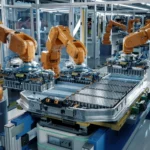
Industrial automation also benefits, as robotic systems on factory floors can coordinate tasks dynamically, optimizing throughput while responding instantly to equipment anomalies or safety signals.
Challenges Facing Quantum Edge AI Computing
Despite its promise, Quantum Edge AI Computing faces technical and governance challenges. Edge devices must balance computational power with energy efficiency, demanding highly optimized algorithms and specialized hardware accelerators. Security is another concern, as distributed intelligence introduces more potential entry points for cyber threats.
Standardization and interoperability also remain evolving areas. Ensuring that diverse edge nodes communicate seamlessly while maintaining model integrity requires robust protocols and governance frameworks that scale with system complexity.
Future Outlook for Quantum Edge AI Computing
Looking ahead, Quantum Edge AI Computing is poised to become a cornerstone of intelligent digital ecosystems. As semiconductor technologies evolve and quantum-inspired algorithms mature, edge devices will gain the capacity to handle increasingly sophisticated workloads. This evolution will support smarter cities, autonomous logistics networks, and context-aware consumer technologies that respond instantly to user needs.
The long-term vision includes self-organizing edge swarms capable of collaborative reasoning, where each node contributes partial insights that collectively produce highly accurate, real-time intelligence across vast environments.
Conclusion
Quantum Edge AI Computing offers a compelling blueprint for the future of intelligent systems. By uniting localized processing, adaptive AI models, and quantum-inspired optimization, it addresses the fundamental limitations of latency, bandwidth, and centralized dependence. While challenges around security, efficiency, and standardization must be addressed, the trajectory is clear: decentralized intelligence will define the next era of computing. Organizations that explore and adopt this paradigm early will gain a decisive advantage in building responsive, scalable, and privacy-aware digital solutions.